
The Structural Contradiction of Layoffs and Mass Hiring Co-Existing in Semi Industry
The semiconductor industry has always been cyclical, but the current moment feels particularly paradoxical. In the same headlines, we see announcements of layoffs, hiring freezes, and project cancellations alongside news of massive recruitment drives, new fab construction, and aggressive talent campaigns.
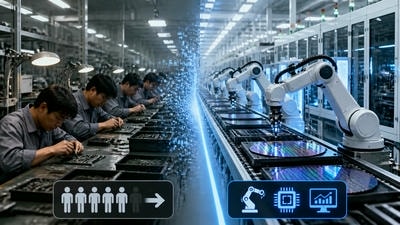
This article explores why this contrast exists, how it plays out across functions and regions, what it means for workers and companies, and how to interpret it as part of a broader structural evolution rather than a simple boom‑bust story.
Cyclical versus structural: two forces colliding
To understand why layoffs and mass hiring can coexist, it helps to distinguish between cyclical and structural forces in semiconductors.
Cyclical forces are the familiar inventory corrections and demand swings that have long characterized the sector. When end‑market demand slows or inventory builds up, companies cut output, trim costs, and sometimes reduce headcount—especially in areas tied to short‑term volume. When demand rebounds, they ramp back up.
Structural forces, by contrast, are long‑term shifts in what the industry produces and where. The rise of AI, automotive electrification, industrial automation, edge computing, and onshoring initiatives has created durable demand for certain categories of chips, packaging technologies, and manufacturing capacity. These structural forces can drive long‑term hiring for new fabs, R&D centers, and engineering roles even during cyclical downturns in other product lines.
The apparent paradox arises when cyclical headwinds hit legacy or slower‑growth segments at the same time structural tailwinds spur expansion in new ones. Companies then find themselves simultaneously shedding workers in some departments while aggressively hiring in others.
Where layoffs are concentrated – and why

Layoffs in the semiconductor industry tend to cluster in specific areas rather than spread evenly across all functions.
Consumer‑centric segments. Teams focused heavily on smartphones, PCs, and certain consumer electronics are vulnerable when refresh cycles slow and end‑market demand softens. Inventory corrections in these channels can result in reduced production and headcount in related product groups.
Legacy product lines. Mature, low‑margin product families that face long‑term erosion may see consolidation or sunset decisions. Companies may use cyclical downturns as opportunities to restructure or retire legacy offerings, leading to layoffs in associated design and support teams.
Corporate and support functions. Cost‑cutting drives often target overlapping or non‑core corporate functions, particularly after mergers or prolonged periods of aggressive expansion. Redundancies identified during integration can lead to headcount reductions even if the combined firm is still growing elsewhere.
Geographies misaligned with new strategies. When firms shift manufacturing or R&D focus to new regions—often in response to industrial policy incentives or supply‑chain adjustments—they may reduce staffing in locations that no longer fit their strategic footprint.
In each case, layoffs often reflect a combination of cyclical pressure and strategic repositioning, rather than a blanket decline in overall company prospects.
Where mass hiring is happening – and why
At the same time, mass hiring is occurring in segments and locations aligned with new strategic priorities and long‑term growth opportunities.
New fabs and capacity expansions. Large greenfield fab projects and major expansions in regions targeted by industrial policy—such as advanced‑node logic fabs, specialty power and analog plants, and advanced packaging facilities—require hundreds or thousands of new staff. Operators, process engineers, maintenance technicians, and facilities specialists are all in high demand.
AI and high‑performance computing. Companies investing in AI accelerators, high‑end GPUs, networking silicon, and memory subsystems are hiring aggressively in architecture, RTL design, verification, physical design, and software‑hardware co‑optimization. The race to serve AI demand makes talent a bottleneck.
Automotive and industrial segments. Electrification, ADAS, and smart factory initiatives drive demand for domain controllers, power devices, sensors, and connectivity ICs. Semi firms that specialize in these areas frequently expand application engineering, safety and reliability teams, and product marketing focused on automotive and industrial customers.
Equipment, materials, and packaging. Growth in domestic manufacturing and advanced packaging pushes tool vendors, materials suppliers, and OSATs to hire more engineers and technicians. These upstream segments need talent to design, build, and support next‑generation equipment and consumables.
Mass hiring in these areas often reflects multiyear strategic commitments rather than short‑term volume fluctuations, which is why it can continue even as other parts of the industry retrench.
The skills mismatch at the heart of the contrast

A crucial factor behind simultaneous layoffs and hiring is the skills mismatch between roles being eliminated and those being created.
The industry’s new growth engines—AI, advanced packaging, automotive power electronics, system‑level design—often require specialized skills in architecture, machine learning, mixed‑signal design, reliability engineering, and complex manufacturing processes. Meanwhile, many roles affected by layoffs are rooted in legacy product lines, older process nodes, or business areas less central to future strategy.
This mismatch means that a company cannot simply reassign every laid‑off worker into new positions. Retraining is possible and increasingly important, but it has limits in terms of time, cost, and suitability. As a result, firms may reduce headcount in saturated skills while simultaneously recruiting aggressively for new ones, especially in competitive labor markets where experienced semiconductor talent is scarce.
For workers, this creates both challenge and opportunity: some skill sets face shrinking demand, while others enjoy rising bargaining power and mobility.
Regional and policy drivers: onshoring meets global cycles
Regional industrial policies and onshoring initiatives amplify the contrast between layoffs and mass hiring.
Governments across multiple regions have launched subsidy programs, tax incentives, and regulatory support aimed at expanding domestic semiconductor manufacturing, advanced packaging, and upstream supply chains. New fabs and R&D centers tied to these programs necessarily involve large hiring campaigns.
At the same time, global demand cycles and company‑specific strategies may lead firms to reduce headcount in regions not aligned with these policy priorities. For example, a company could be cutting roles in one country due to a consumption slowdown while hiring hundreds in another country to staff a new, subsidized facility.
This geographically uneven pattern contributes to the impression of an industry both shrinking and expanding, depending on where one looks. It also raises questions about how talent moves across borders and how local labor markets adjust to new clusters of semiconductor activity.
Impact on workers: careers in a dual‑speed industry
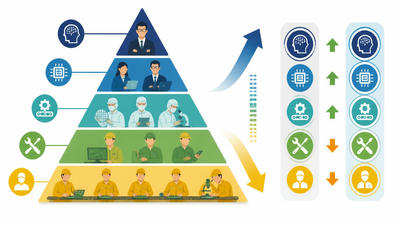
For semiconductor professionals, the coexistence of layoffs and mass hiring makes career planning more complex but also creates new avenues for growth.
Job security tied to segment choice. Workers in fast‑growing areas—such as AI logic, automotive power, or advanced packaging—may experience strong job security and multiple offers, while those in slower‑growth consumer segments face higher risk of restructuring. Segment choice increasingly matters for long‑term stability.
Reskilling and domain pivoting. Engineers and technicians whose roles are exposed to cyclical cuts can mitigate risk by reskilling toward structurally growing domains. Moving from generic consumer analog to automotive‑grade power, or from older digital design flows to AI‑centric architectures, can improve prospects.
Geographic mobility. The rise of new semiconductor hubs in certain regions may reward those willing and able to relocate. Conversely, workers in regions losing strategic focus may feel more pressure to move or change employers.
Psychological and cultural effects. Within companies, hearing about layoffs in one division while another is hiring aggressively can create anxiety and confusion. Clear internal communication about strategic priorities, reskilling options, and mobility pathways is crucial to maintaining morale.
Implications for companies: managing a structurally uneven labor market
Companies must adapt HR and talent strategies to the reality of an industry where some units expand while others contract.
Segmented workforce planning. Rather than applying uniform hiring freezes or growth policies, firms need granular workforce plans tailored to each business unit’s strategic role and demand outlook. That means growing in AI, automotive, and packaging even when trimming elsewhere.
Internal mobility and retraining. To reduce involuntary separations, companies can invest in internal mobility programs that help employees move from declining segments to growth areas. Structured retraining, mentorship, and role transition pathways can preserve institutional knowledge while evolving skill sets.
Transparent communication. Explaining why layoffs and hiring can coexist—linking decisions to specific product lines, technologies, and regions—helps employees understand that restructuring is not arbitrary. Transparency supports trust even during difficult changes.
Strategic use of contractors and partners. In areas where demand is volatile, firms may rely more on contractors or design partners to buffer cycles, while internal teams focus on core, long‑horizon programs. This can reduce the need for rapid headcount adjustments.
Investor perspective: reading layoffs and hiring as signals
For investors, the juxtaposition of workforce reductions and expansion plans is a valuable signal about management quality and strategic clarity.
Focus versus drift. Layoffs that clearly target non‑core or structurally challenged segments, paired with focused hiring in growth domains, can indicate disciplined capital allocation. Conversely, indiscriminate cuts amid vague hiring plans may suggest reactive rather than strategic management.
Commitment to long‑term bets. Continued hiring into new fabs, AI teams, and advanced packaging even during downturns in legacy segments shows commitment to long‑term positioning. Investors may favor companies that continue to invest through cycles in clearly articulated future growth engines.
Cost discipline. Workforce adjustments, when handled thoughtfully, can improve operating leverage and margins. The key is whether cost savings come from genuine efficiency gains or simply from short‑term cuts that undermine future capability.
Risk of talent erosion. Aggressive layoffs without robust retention and reskilling mechanisms can lead to loss of critical expertise. Investors should watch how firms manage talent through restructuring, as this affects innovation and execution.
Policy and education: shaping future talent pipelines
Governments and educational institutions also play roles in addressing the structural contrast between layoffs and hiring.
Aligning curricula with evolving demand. Universities and technical schools can adjust programs to emphasize domains where semiconductor demand is structurally strong—such as power electronics, AI hardware, materials science, and advanced manufacturing—helping new graduates enter high‑growth areas.
Support for reskilling. Public‑private partnerships can facilitate reskilling for displaced workers, offering training in emerging segments and connecting them with hiring firms. This can ease transitions and reduce regional dislocation.
Regional development strategies. Policymakers designing semiconductor clusters should consider not only attracting fabs but also building balanced ecosystems that include R&D, packaging, equipment, and materials, thereby creating diverse job opportunities and mitigating concentration risk.
Labor mobility frameworks. Immigration policies, cross‑border recognition of qualifications, and support for relocation can influence how easily talent can move to where demand is rising, affecting both national competitiveness and worker outcomes.
Conclusion: a dual‑speed industry in transition
The structural contrast of layoffs and mass hiring co‑existing in the semiconductor industry is not a contradiction—it is a symptom of transition. The sector is moving from a world dominated by consumer cycles and centralized manufacturing to one defined by AI, automotive and industrial systems, advanced packaging, and geographically diversified capacity underpinned by industrial policy.
In this dual‑speed environment, some segments and skill sets face consolidation and retrenchment, while others enjoy strong, sustained demand. Companies that manage this reality with clear strategy, careful workforce planning, and robust reskilling will be better positioned to thrive. Workers who align their careers with structurally growing domains and remain adaptable will find new opportunities even amid headlines about layoffs. And observers who interpret both cuts and expansion as part of the same structural story will have a clearer view of where the semiconductor industry is headed—and how its evolving labor dynamics will shape innovation and competitiveness in the years ahead.